
The Ultimate Wearable Tech Guide for Marathon Runners in 2025: Precision, Performance, and Privacy
Wearable tech for marathon an

Marathon running is an intense blend of physical stamina, mental focus, and smart planning. If you’re serious about chasing personal bests or just making sure you get to the finish line strong and injury-free, the right wearable can be a game changer. But in 2025, it’s not just about what a device measures—it’s also about how your personal data is handled. You want precision and insight, without trading away your privacy.
Here’s a detailed breakdown of the top wearable tech for marathoners, straight from the trenches—what they do best, where they fall short, and how they protect (or don’t protect) your data.
1. Garmin Forerunner Series: The All-Rounder for Data Geeks
What it offers:
Garmin’s Forerunner series, especially models like the Forerunner 265 and 970, are like having a coach on your wrist. They use multi-band GPS technology to deliver super-accurate pace, distance, and route data—crucial for fine-tuning your splits and race strategy.
Expect to get detailed heart rate monitoring with ECG-level optical sensors that also track heart rate variability (HRV). This lets you understand how fatigued or recovered you really are. The newest Forerunner models even push boundaries with optical sensors that estimate dehydration by measuring your blood’s hematocrit levels. Think of hydration alerts based on what your body actually needs, not just timers telling you “drink up.”
For real-world use, you get 4 days of smartwatch time or about 25 hours with full GPS and sensors running, enough for most marathon training runs and races. Garmin’s ecosystem connects to popular platforms like TrainingPeaks and Strava, so post-run analytics and coaching plans sync smoothly.
Where it falls short:
Privacy-wise, Garmin isn’t perfect. Your data travels through the cloud, stored in servers that may be outside your country. While Garmin encrypts your info and gives you control over sharing settings, the nature of cloud syncing means you have to actively manage these controls—otherwise your routes and health stats might be shared with third parties. It’s an opt-in/opt-out game that requires attention.
Why it’s great for marathoners:
If you want comprehensive, data-rich insights that feed into a proven training ecosystem, Garmin nails it. But be ready to keep an eye on your data sharing preferences if privacy is important to you.
2. Polar Vantage M3: The Privacy-Conscious Performance Partner
What it offers:
Polar focuses heavily on physiological accuracy, which any marathoner will appreciate. The Vantage M3’s heart rate sensor rivals ECG devices, giving you reliable training and recovery data. Its “Training Load Pro” feature helps balance the stress your body absorbs during runs, which is key for avoiding burnout or injury.
Battery life here is no joke—expect up to 7 days typical use and 40 hours in active training mode. Polar also incorporates hydration and temperature sensors in select models, so you get a broader picture of your performance environment.
Privacy lift:
What sets Polar apart is its approach to privacy. Fully GDPR-compliant, Polar minimizes data sharing and gives you explicit permission controls. The default is limited sharing, and you have clear insights into what data is collected and why. This is a big win if you’re wary of handing over your health info to big tech.
Potential downsides:
Hydration sensors aren’t standard across all models yet, and integrating data from these features sometimes feels clunky. Plus, you need an internet connection to fully leverage Polar’s app ecosystem.
Why it’s great for marathoners:
If you want solid scientific data and peace of mind around privacy, Polar’s thoughtful approach is likely to win you over.
3. Coros Pace 3: The Lightweight Privacy Minimalist
What it offers:
If you want your watch to feel like it’s barely there, Coros Pace 3 is one of the lightest GPS wearables out there—just 29 grams. It covers all the essentials: accurate GPS, solid optical heart rate monitoring with pulse oximetry, and cadence sensors to refine your stride.
The standout feature here is battery life—up to 30 hours with GPS going strong, and two weeks of regular use. That’s perfect for long training blocks or back-to-back runs without scrambling to charge.
Privacy strengths:
Coros takes a minimalist approach with fewer cloud dependencies. Data is mostly stored locally and shared only with apps you specifically connect to. That means less exposure and fewer privacy headaches.
Where it lacks:
You won’t find the extra metrics like hydration sensing here or the extensive training plan ecosystems Garmin and Polar offer. The app ecosystem is more basic, which may frustrate runners who want deep analytics or community features.
Why it’s great for marathoners:
Coros is a solid pick for runners who want reliable basics wrapped in privacy-first packaging, without extra weight or incessant syncing demands.
Privacy: The Invisible Race You Also Need to Win
Marathon wearables collect more than just your miles. They hold your health vitals and your daily routines. This data can reveal home addresses, training routes, or even your health vulnerabilities if not protected properly.
What to watch for:
Does your device run most of its processing locally, or does it offload everything to the cloud? Local (“edge”) processing means less exposure.
What kind of encryption does your device and app use? AES-256 is the gold standard.
Can you opt out of sending data to third parties or disable cloud backups?
Does the brand have regular security updates, or are you stuck with buggy old software?
Do they have a clear, straightforward privacy policy that you can understand?
In Closing
For marathon runners pushing their limits, wearables in 2025 have never been smarter or more specialized. Garmin offers a full analytics power suite but requires you to manage privacy carefully. Polar blends high accuracy with strong privacy commitments, great for those who want a balance. Coros serves privacy-minded runners who want lightweight and dependable without fuss, see figure 1.
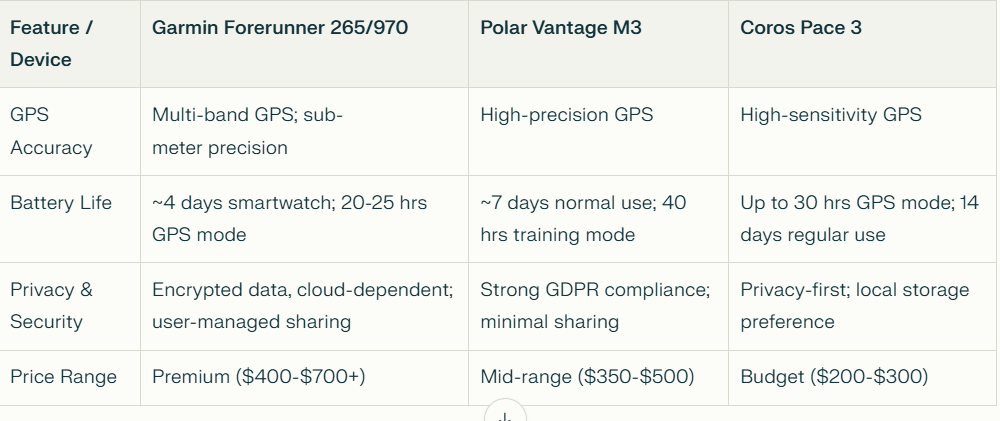
Figure 1. A summary of the 3 key features for marathon runners: Battery life, privacy & security and of course, prince range.
Your training and race success depend on data—yes—but never at the cost of your peace of mind. Wearable tech should be an extension of our body, mind and soul. Choose your gear wisely, know what your device is doing with your data, especially your biometric data, and you’ll run stronger, smarter, and safer while having peace of mind.